
The first study revealing the precarity of independent cultural workers in the Republic of Moldova
“The biggest challenge related to this work is that you feel like a drop of water in the ocean. First of all, because the work we do is not recognized as work. Without that recognition, it’s obvious that labor rights are not respected. You can’t even say these rights are being violated—they simply don’t exist.” (Interview 5)
The independent cultural sector in the Republic of Moldova operates within a fragile framework: financial instability, atypical labor, and limited access to social protection. These realities are examined in the study Working Conditions and Access to Social Protection in Moldova’s Independent Cultural Sector (SCI), conducted by Lilia Nenescu—an anthropologist, activist, and project coordinator focused on human rights, civic participation, and urban sustainability.
The research findings will be presented to the public for the first time on 26 October 2025, at 13:00, at Zpațiu, Casa Zemstvei (103 Șciusev St.), during an open discussion with the author.
The event takes place within the 4th edition of SCA / Alternative Cultural Spaces (21–26 October 2025), held across several venues in Chișinău: Casa Zemstvei, Apartamentul Deschis, Bunker, Șciusev 60, Țol, and the Chișinău City History Museum.
The study was based on a questionnaire completed by 50 artists and cultural workers, 72% of whom identify as part of the independent cultural sector. It was complemented by 28 interviews with visual artists, musicians, writers, directors, curators, cultural managers, and other people actively involved in the field. The direct testimonies reveal how cultural workers organize their labor, the economic survival strategies they adopt, and the impact financial uncertainty has on their artistic practice. This provides a detailed picture of labor arrangements, income sources, and the social vulnerabilities faced by independent artists and cultural workers. At the same time, the research identifies legislative gaps and barriers that limit their access to fundamental rights.
Most respondents report irregular and insufficient income. Only 15% work under an individual employment contract, while 35% work exclusively through atypical contracts—copyright or service contracts—which offer neither legal security nor access to social protection. The rest combine hybrid forms of employment, from freelance work to selling cultural products. “Artistic activity covers 10–20% of expenses. The rest is improvisation.” (Interview 22). The lack of predictability turns artistic work into an act of resistance. Many artists work voluntarily, financing their own projects with personal resources, without any guarantee of material compensation.
95% of participants consider social protection insufficient, and one third are not medically insured. “The biggest struggle for cultural workers is the struggle against poverty.” (Interview 6). In the absence of contracts and steady contributions, many have no access to pensions, sick leave, or other forms of support. “Thinking about retirement scares me. Working in independent culture doesn’t secure you socially. You need another job just to pay contributions.” (Interview 5).
This precarity has direct consequences for mental and physical health. Half of respondents work overtime, and 83% are not compensated for extra hours. “Rest barely exists. I work until after midnight. One job replaces another.” (Interview 9). Beyond actual working hours, there is also “hidden labor time”—periods of research, rehearsals, writing, or promotion—that are not contractually recognized. “Months of research, writing, rehearsals aren’t paid. If we reported the entire labor period, the funder wouldn’t even be able to afford it.” (Interview 18).
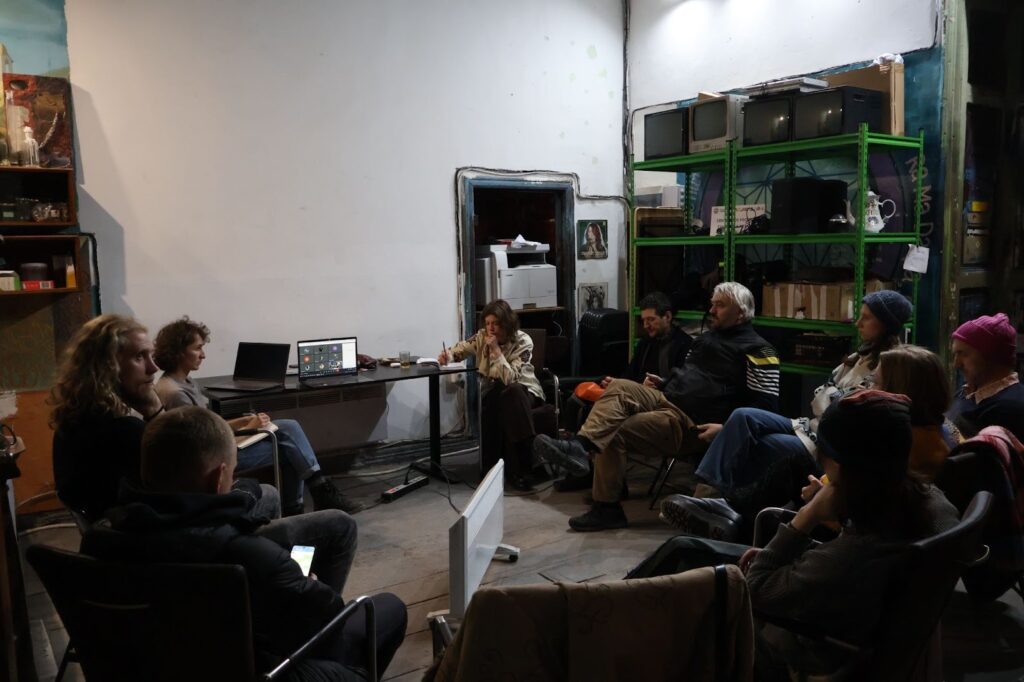
(Cultural work outside working hours – Meeting of the Consultative Forum of the Independent Scene – an open platform for dialogue and collaboration within the independent scene, created to facilitate information exchange and reflection among cultural actors through monthly, informal discussions adapted to the current context, Klub (Casa Zemstvei), February 2025)
Many independent organizations function largely through the founders’ unpaid labor. “I have to be a one-person orchestra, writing about the exhibitions I organize myself. For almost ten years I worked voluntarily—without an accountant, without resources—just so we could become visible.” (Interview 2). Continuous work and overlapping roles lead to exhaustion and loss of personal balance. “I’ve had burnout moments—at least once a year after Bookfest.” (Interview 13).
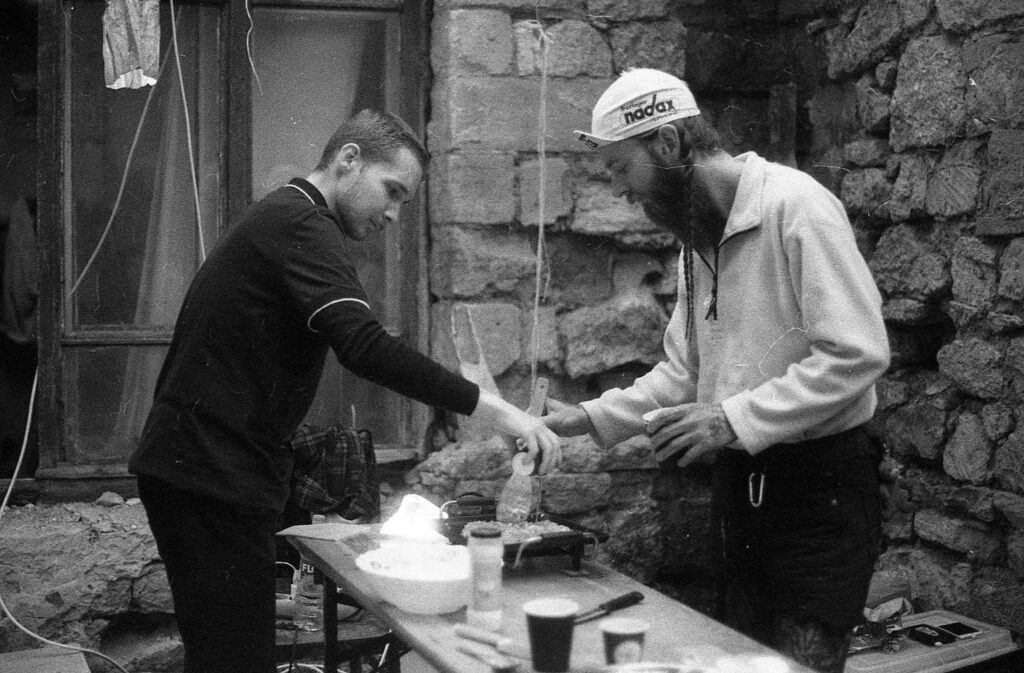
(Work / Volunteering – Victor Zucker and Artiom preparing dinner for Klub Bioskop – the film club at Casa Zemstvei, photo by Kristina Jacot)
For many cultural workers in Moldova, international activity is a way of professional survival. 50% of respondents work partially or exclusively abroad. “My privilege is that I have work abroad and no work at all in Moldova. But if you don’t have work, you can’t afford to negotiate.” (Interview 6). This symbolic exodus of cultural expertise is a loss for local society and evidence of the state’s inability to protect its own cultural capital.
The study describes examples of models from France and Germany, where artists benefit from specific mechanisms: a special insurance fund (KSK) or an unemployment system adapted to the intermittent rhythm of artistic labor. Solutions exist, but they require political will and a profound reform of the legal framework.
For the first time, the study provides a solid empirical foundation for reform linking the dignity of cultural work to human rights. In recent months, at the conceptual level, things have begun to move in a favorable and necessary direction.
In July 2025, the Government approved the Freelancers Law—an important step toward partially addressing issues related to health and social insurance for independent professionals. The law is set to enter into force in January 2026.
At the same time, the National Strategy for Culture and Heritage 2025–2035 proposes improving working conditions by supporting artists and independent initiatives, facilitating access to public spaces, developing certain institutional cooperation mechanisms, and introducing multiannual and predictable funding schemes.
But even in the context of these advances, the measures remain insufficient. The specific nature of independent artistic and cultural labor is still not properly recognized, and cultural workers still do not benefit from social protection adapted to intermittent work—protection that would allow them to work legally and with dignity, without being forced to register as entrepreneurs.
We are glad that those who have taken on commitments to improve the working conditions of independent cultural workers will now have the opportunity to implement them.
The event is organized by the Coalition of the Independent Cultural Sector of the Republic of Moldova as part of the Cultural Blog—a blog dedicated to the Independent Cultural Scene in the Republic of Moldova—with the support of the Swiss Government.
*
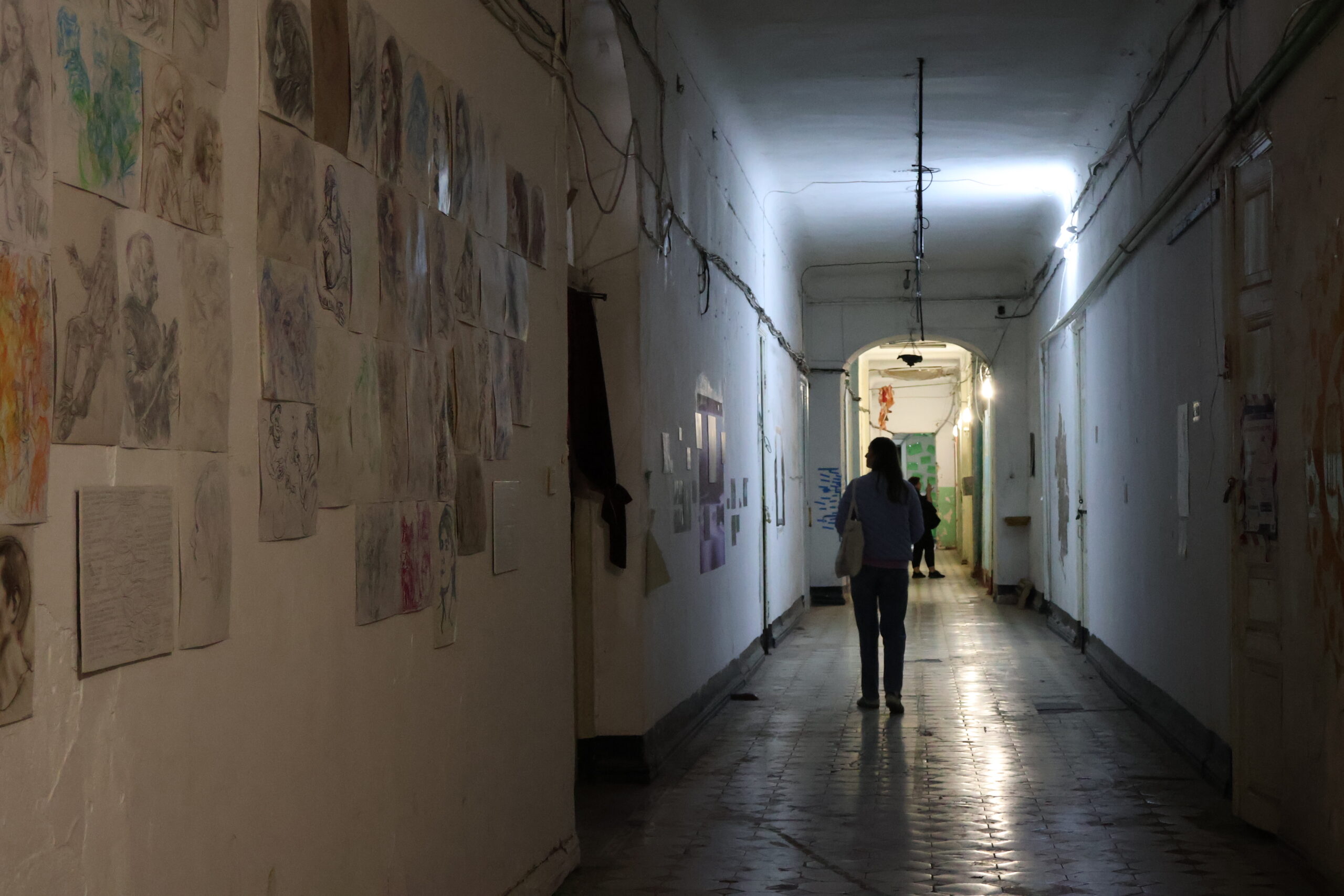
Background image: the corridor at Casa Zemstvei—a transitional space connecting all the rooms in the building, creating links between initiatives, artists, works, ideas, and audiences.
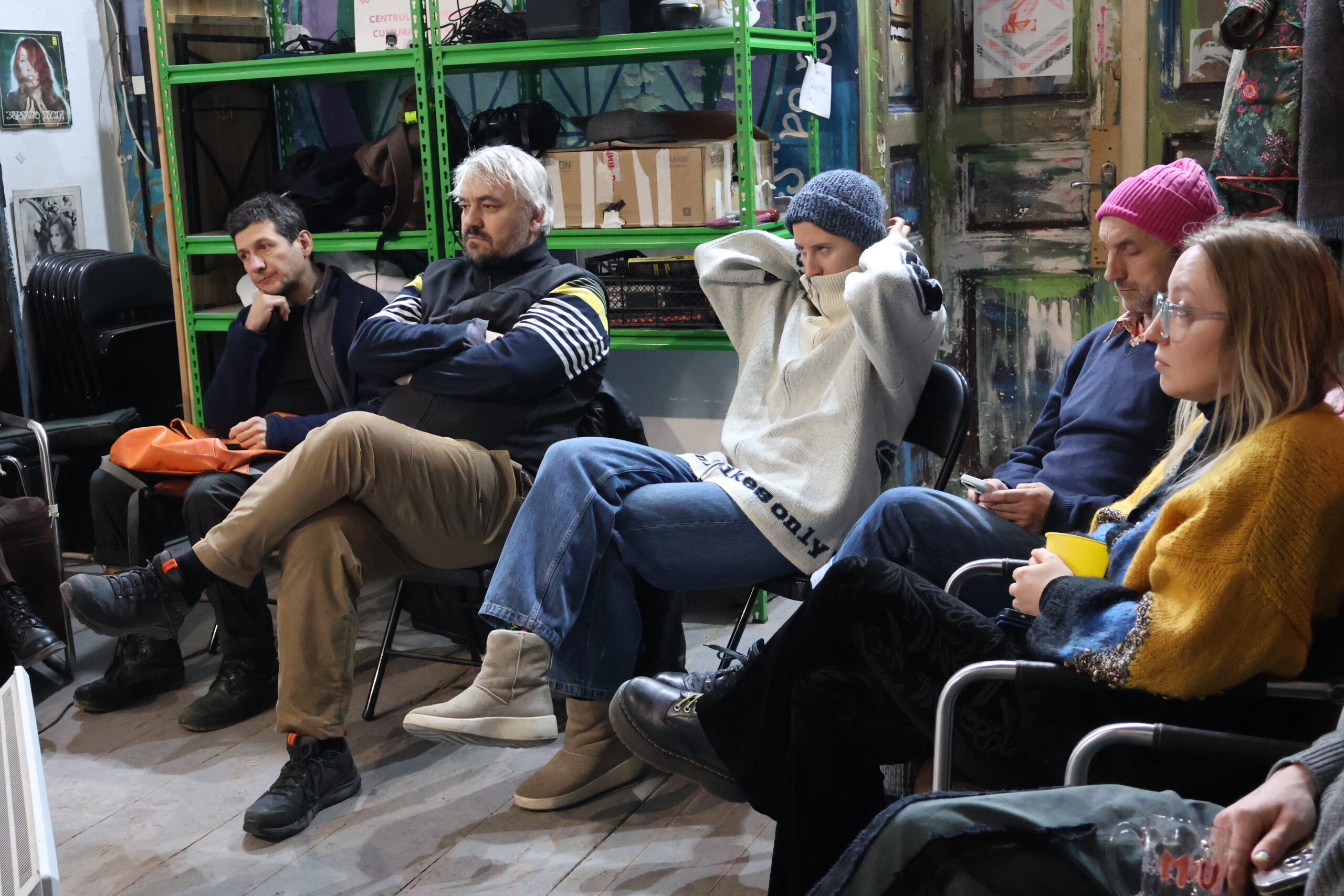
The first-ever sociological study about the Independent Cultural Sector in the Republic of Moldova
Study: Working conditions and access to social protection in Moldova’s independent cultural sector
Prin trimiterea adresei de e-mail, dați acord cu prelucrarea datelor și politica de confidențialitate.

