
Why Recruiting New Voices is Important

Text: Ilarion Szemerzewski
Under conditions of background chronic instability—dictatorships, wars, humanitarian and environmental catastrophes—freedom of expression and experimentation becomes highly valuable, yet also significantly more complicated. The sociologist Zygmunt Bauman emphasises that unstable modernity produces a widespread sense of insecurity and anxiety. As a result, a pervasive feeling of uncertainty arises. People can hardly plan for the future when the ground is constantly slipping from under their feet. In such an atmosphere, culture often becomes one of society’s demons—a means of mobilising fear or, conversely, a source of consolation and resistance. At the same time, the importance of independent creative initiatives grows. As the manifesto of the Coalition of the Independent Cultural Sector of Moldova states, independent cultural initiatives should develop critical thinking, challenge dominant discourses, and give voice to the marginalised. The independent cultural scene is an aggregate of non-politicised, non-profit projects that act autonomously, without intervention from the state or commercial structures in their curatorial and editorial policy. It is precisely such initiatives that are called upon to fill the gaps in official culture, to become an alternative to the “official” and commercialised art scene.
Writing this essay gave me an excellent opportunity to analyse what is happening around me and the difficulties I face as an art curator and a member of Moldova’s queer community.
One of the centres of independent culture has become the Casa Zemstvei complex in Chișinău—the building of the former orphanage, later the headquarters of the Zemstva Guberniale of Bessarabia, leased to initiatives. Dozens of organisations operate there. Among them is Queer Café, a multifunctional cultural centre that has had two locations now, part of the Coalition and engaged, among other things, in staging art exhibitions. Queer Café has become a key venue for the LGBT+ community and allied initiatives. I am particularly concerned with its cultural diversity as a kind of “ecosystem” intended to bring together different voices both within the community and beyond it.
As the art historian and philosopher Boris Groys has noted, art possesses an “autonomous power of resistance”—in other words, a work of art can, by its mere existence, become an act of protest and a means of reflecting on reality. This encourages us to support a variety of authors, because the living force of art lies precisely in the diversity of perspectives. We consider it important to provide a platform for discussion, and in order to engage different audiences, we experiment with art forms and exhibition formats.
At present (as of February 2026) Queer Café is hosting an exhibition in a new format. Instead of visual works, we have decided to exhibit poems. Their author lays bare the soul, telling of his emotional journey from living by the precepts of a traditional patriarchal world to accepting his homosexual identity. Each poem is accompanied by a QR code so that every reader can leave feedback and share their thoughts.
In the autumn of 2025, we held an interactive exhibition where people could bring a random item and tell the story associated with it. People told the most interesting and unusual stories. For example, part of this exhibition was a belt with the engraving “Glory to Ukraine” on the buckle, given to one of Queer Café’s visitors—who is not a member of the queer community—by his father, who went to fight for his country. At the first Russian attacks he told his son with a heavy look that “this is going to be long”. There was also a keychain gifted to one of our artists, an English teacher at a school, by her teenage pupil. The artist shared her thoughts that we talk a lot about the “inner child”, but nobody ever speaks of the “inner teenager”—that very person for whom no obstacles exist, and who has abundant energy that allows them, if not to move heaven and earth, then at least to believe that they shall be enough to move heaven and earth. This trait fades over time. The interactive exhibition of random objects created a meaningful décor for the space: for a period, the items stayed with us and were accompanied by a printed transcript of the story told; at the same time, it allowed everyone to bring their own small “anti-culture” and to see everyday objects in a new light.
Of course, Queer Café spends most of its time, oddly enough, on traditional painting and graphic arts. Since last year we have changed our approach and now stage only one exhibition a month, accompanied by an additional cultural event alongside the opening night. These exhibitions include oil painting, colour graphics and graphics produced using old printing techniques such as etching and aquatint. Given that this format is in demand, Queer Café invites digital artists to take part in exhibitions. Different techniques and styles may coexist in a single exhibition, expanding the idea of what queer art can be, recalling that one of the meanings of the word “queer” is “unusual” or “non-traditional”.
This multifaceted programming supports individual creativity and freedom of expression. UNESCO proclaims cultural diversity to be a “fundamental characteristic of humanity”, enriching the world and widening people’s range of choices. Likewise, noted artists of the last century spoke of a universal creative principle. For example, the German artist Joseph Beuys proclaimed that “every man is an artist”. He believed that art possesses a “revolutionary force, revealing the creative potential of each person and, consequently, capable of transforming society”. We share this vision, as at Queer Café anyone can become a creator and influence others with their expression.
Queer Café brings together people with very different pasts, views and interests. Despite the common goals, the diversity of themes and aesthetics can create tension. Not all topics harmonise with one another, and the combination of techniques and styles can sometimes seem discordant to the viewer. Nevertheless, it is precisely such contradictions that fuels creativity, supports experiment and the creation of alternatives, sometimes provoking debate and conflict of opinion.
Despite all the obstacles, art remains one of the few weapons and a means of survival of the spirit. Culture acts as both a mirror and an antithesis: it reveals accumulated traumas, but also suggests ways of comprehension. In times of crisis, artistic practice becomes an act of resistance, a way to assert one’s right to exist and to be visible. In history, we find examples where periods of instability have given rise to powerful creativity. Take, for example, Impressionism—a movement that emerged as a response to the calcified system of academic “official” art supported by the state and recognised by wealthy patrons. Although it may seem that we will not create anything new today, it is important to turn tensions into dialogue. Queer Café’s cultural practices are precisely intended to foster this dialogue: through poetry, objects or painting we try to demystify the fear of the new, the unknown and the unfamiliar.
In the present circumstances I, as a curator and a member of the independent association Moldox, am concerned by the visible passivity of the queer community itself.
Political pressure and domestic instability create an atmosphere of fear and fatigue. On the one hand, external political pressure—Russian propaganda and influence—runs counter to our values. Russian disinformation campaigns in Moldova deliberately focus on “traditional values”, seeking to sow fear and distrust towards LGBT+ themes. For example, one of the widely spread pro-Kremlin ideas is that “the EU is supposedly imposing LGBT values, destroying the traditional family”, and that children will learn to become homosexual. Such messages discourage many people and create an atmosphere of hostility: public sentiment often fuels “counter-processions” against pride events and “Family Festivals” which call to “stop the propaganda of homosexuality”.
The gulf between such positions reflects the current cultural split in society: parts of the population can be easily incited to hostility by playing on fears, including the issue of language and nationality. Thus, there are artists and viewers who are afraid to be openly associated with LGBT+ topics.
Besides, among the artists at Queer Café there are those for whom issues of women’s rights and freedom are important. Official data shows dozens of cases of deliberate killing of women because of their sex (femicide or gender-based killings)—this is not an artistic matter but a real social phenomenon that reflects the degree of violence and structural problems in society. Moldova recorded 24 cases of femicide in 2022, and many victims had contacted law enforcement before their deaths. New statistics show that femicide remains a persistent problem with a high proportion of fatal outcomes among cases of male violence against women.
Furthermore, it is often said within art circles that Moldova’s art scene as a whole is developing with difficulty, and, to put it bluntly, it remains deeply parochial, “provincial”. I recall the words of the director of a Chişinău art gallery, who remarked that his colleagues in France would ask, “Moldova? Where is that?” For them, east of Romania comes Ukraine.
In Moldova independent projects suffer from a lack of funding and systemic support: decades after the collapse of the Soviet Union, national cultural policy has remained largely centralised and oriented towards outdated models. Allow me to quote Vasily Kandinsky: “Each cultural period creates its own art, which cannot be repeated. The aspiration to breathe life into artistic principles of the past can, at best, produce artworks akin to a stillborn child. We cannot feel as the ancient Greeks felt, nor live their inner life. Thus, efforts to apply Greek principles in plastic art can only create forms similar to the Greek, but the work itself will remain soulless for all time. Such imitation is like apeing. From a superficial perspective, an ape’s movements may appear remarkably similar to those of a human. The ape sits and holds a book before it, turns the pages, makes a thoughtful face, but the inner meaning of these movements is entirely absent.”
An analysis of 2024 notes that “cultural life revolves around state institutions, the government plays the role of its own cultural “gatekeeper”, organising events according to a top-down scheme.” This means that any unofficial initiative finds itself outside the mainstream and is often discredited. Thus, in 2019 groups of activists applied to establish a Centre for Contemporary Art in Casa Zemstvei but received a silent refusal. The scarcity of funding worsens the situation: while EU countries allocate 1–3% of GDP to culture, in Moldova the share fell to 0.70% of GDP by 2023.
Accordingly, the independent sector struggles to survive: participants have to invest their own money, while the lack of long-term stability makes planning difficult and hinders efforts to attract young talented artists: while many are simply reluctant to associate their work with the queer scene, others do not know about collaboration opportunities at all, especially considering that Queer Café is not a specialised gallery. Meanwhile, if a queer venue becomes too hermetic, we risk losing the exchange of “new blood” and perspectives.
So that is precisely why we must continue to act: to give a voice to the voiceless and to keep the space open. At the same time, it is crucial to remain attentive when selecting the works that enter an exhibition. As a curator, I do not attach much importance to an artist’s private life or sexual preferences; as a matter of principle, I do not work with overtly politically charged exhibitions. However, exhibitions at Queer Café may be timed to coincide with important events or dates. What matters is finding a balance between curatorial practice and activism. This comes more easily to me because I have never considered or described myself as an activist. If anything, I engage in this work passively. What interests me most is the artist.
Vasily Kandinsky wrote: “The spectator calmly turns away from the artist who sees the purpose of his life not in purposeless art but instead pursues higher aims. Understanding raises the spectator to the standpoint of the artist. Earlier, we said that art is the child of its time. Such art can only repeat artistically what already clearly fills the contemporary atmosphere. This art, which contains no potential for the future, art that is only the child of its time and can never become the mother of the future, is a barren art. It is short-lived; it dies morally at the moment when the atmosphere that created it changes. Another art, capable of further development, also has its roots in its spiritual epoch, but it is not merely an echo and a mirror of the latter; it possesses an awakening, prophetic power, capable of acting deeply and over a long duration.”
If society is full of contradictions, we must allow them to resonate in creative work rather than suppress them. Aristotle taught that the human being is a “political animal”, which means that any cultural endeavour already carries social significance. Independent artists and curators in Moldova today assume the role of pathfinders: it is we who demonstrate that movement within uncertainty is possible. In the very concept of uncertainty lies a chance—a chance for culture to be enriched with new meanings, to bring together people of different backgrounds, and to show that art survives wherever hope has not died.
CHISINAU 2026
Material realizat în cadrul Blogului Cultural al Coaliției Sectorului Cultural Independent din Republica Moldova, cu suportul Biroului de cooperare al Elveției/ Reprezentanța Ambasadei Confederației Elvețiene în Republica Moldova și a Institutului Cultural Danez.
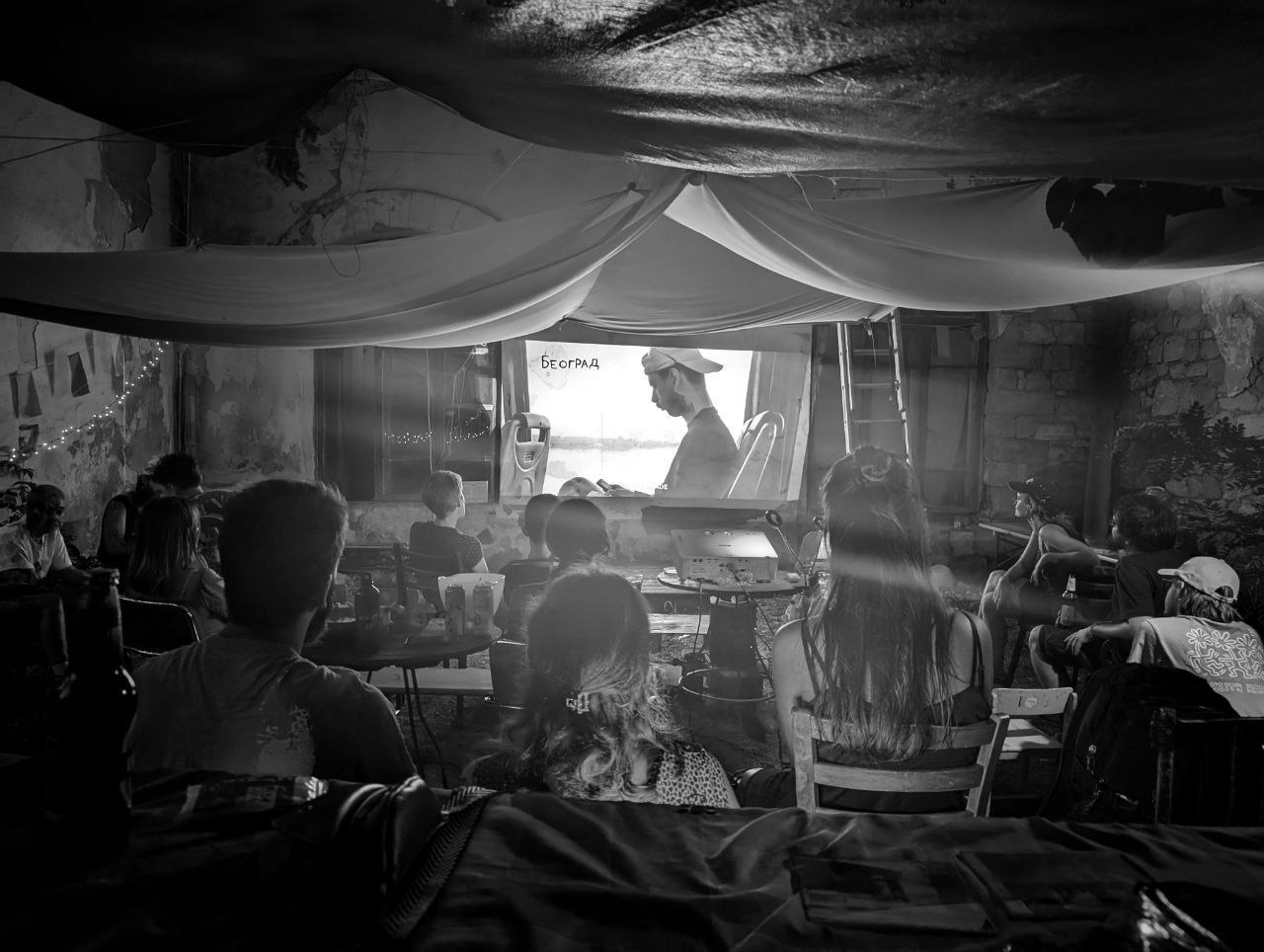
KLUB BIOSKOP. Exercițiu de autoevaluare.
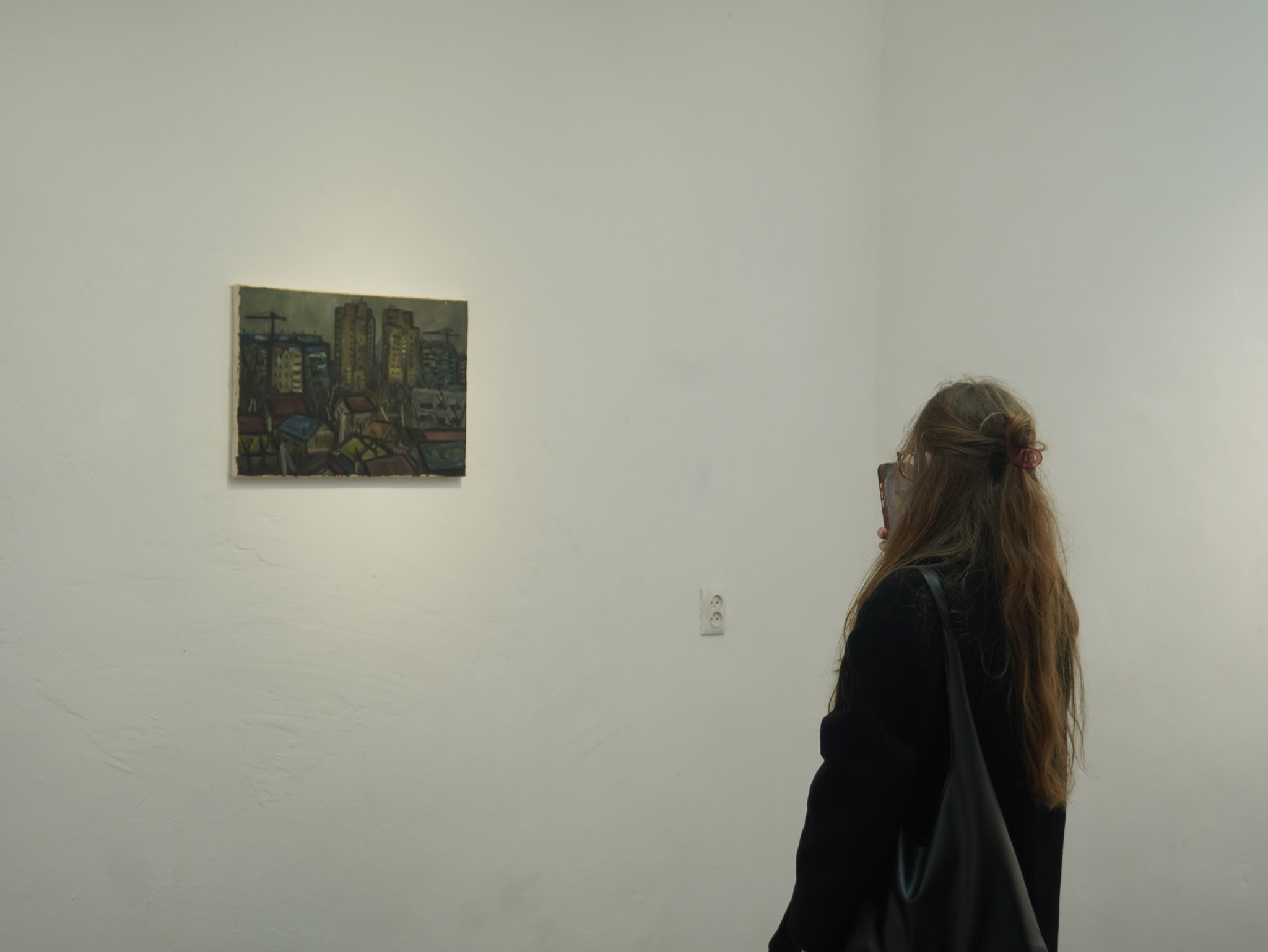
Declinul modernității prin prisma peisajelor lui Vlad Marinovschi
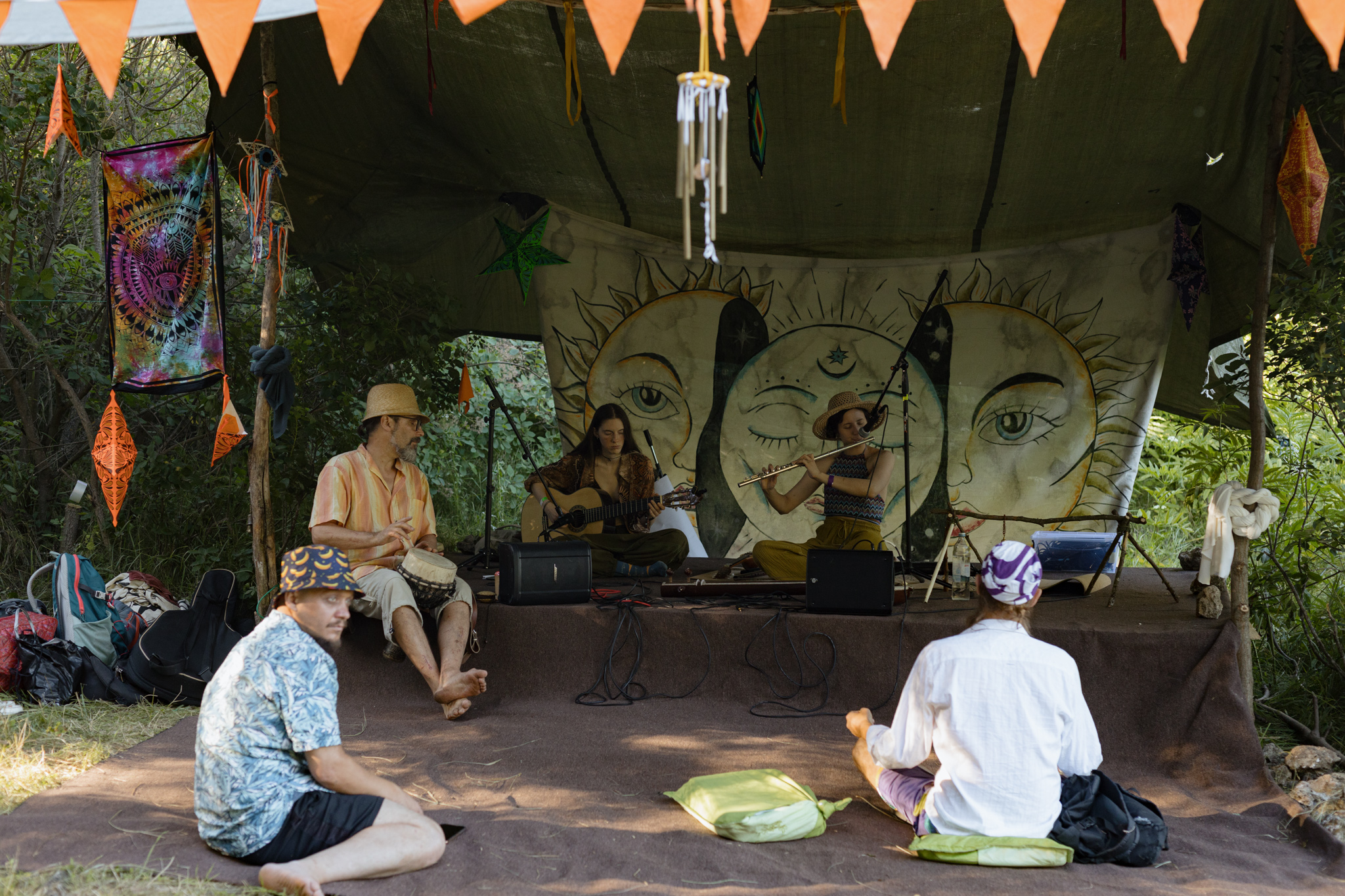
Rezumart 06.24
Prin trimiterea adresei de e-mail, dați acord cu prelucrarea datelor și politica de confidențialitate.
