
Sweet uncertainty: notes and lessons from making a film about tomatoes
Text: Marina Sulima
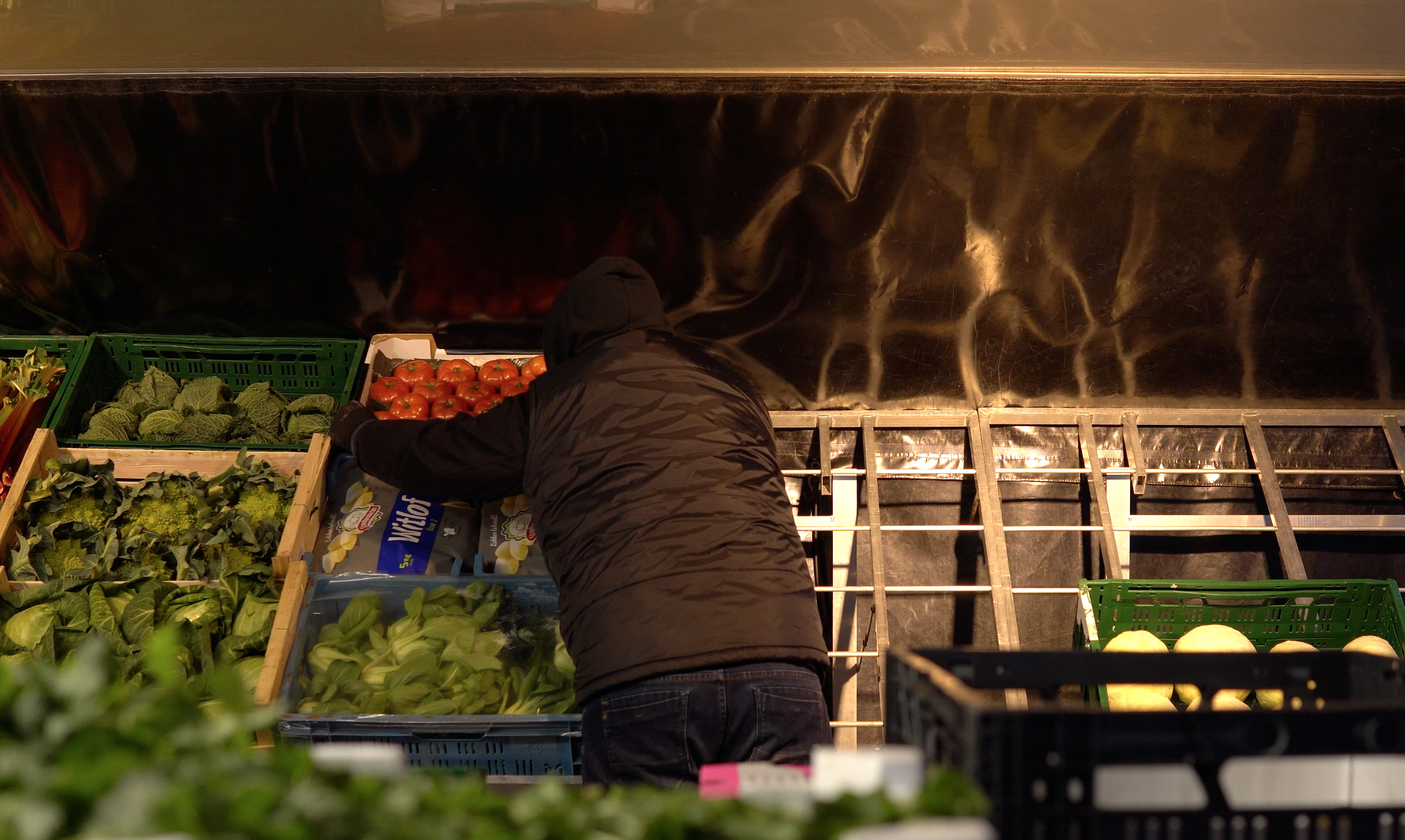
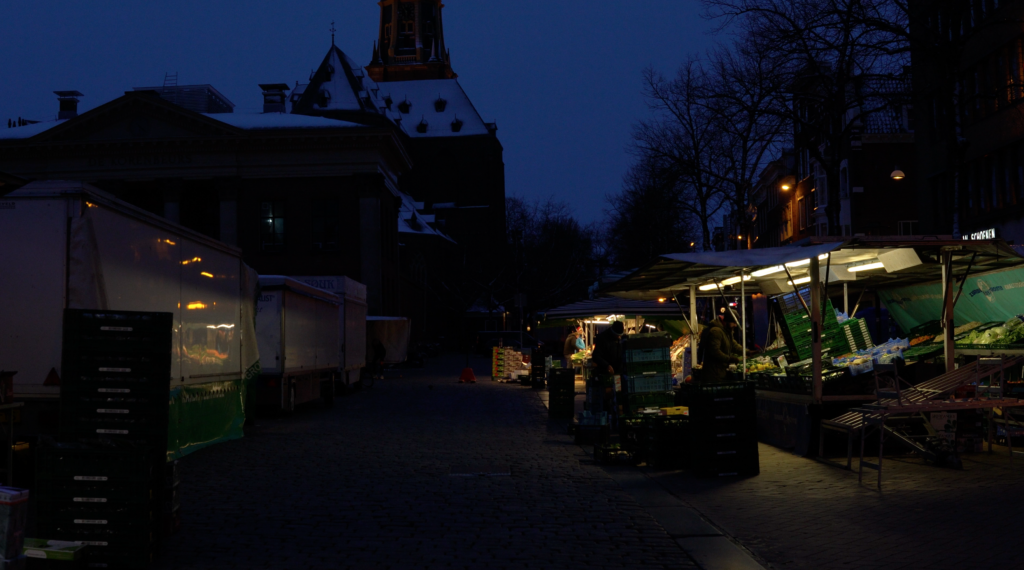
The vegetable market in Groningen, The Netherlands in January 2022 at 5AM. Fresh tomatoes are sold throughout the year.
January 2022. I worry a lot at night. My face red like a tomato, my heart running like an engine. As soon as I close my eyes, thousands of images rush over me. In one of them, I see myself from above. I see someone who comes from a line of peasants and teachers from Ghindești, a village formerly known for its sugar factory (now closed) on the banks of Răut river in the North of Moldova. Right now, I’m living and working as an artist in Groningen, a university city in the North of The Netherlands that also happens to have a sugar beet factory – this one still working.
I think about the sugar beet, the heavy smell of its molasses. I think of all the trucks carrying them, about all the slaked lime and sulphur dioxide drained in Răut along the years that the factory produced sugar in Ghindești. I imagine walking around the Răut river, worrying whether there will still be a river when I return the next time. Could this be the year it dries out?
Other questions keep me awake at night: is it extractive to make work about Moldova while not living there? Should the stories about someone or someplace not return to and be seen by that same one and in that same place? But what happens if the drawings and films you make are informed and nurtured not by one place, but by many? And what if the food you ingest in turn nibbles away at all these other spaces further away?
There are also less tormenting questions. Could tiny mushrooms break through my skin like they break through the bark of an old birch? Delicate mushrooms wiggling on your hand with every move. A revolting thought! These images haunt me ever since I learned about vivipary. Seeds or embryos are normally dropped by their parent plants. In vivipary plants, the seeds are never released and so start growing within. Normal for mammals; rare in plants. Spiralling, squiggling tomato seedlings looking like mushrooms, sprouting inside a red tomato.
I am obsessed with this phenomenon. It seems like vivipary in tomatoes can happen when they’re stored for a long time, have potassium deficiency or are overfertilized with nitrogen. All these cases are real possibilities in The Netherlands. While the country is dealing with an overabundance of nitrogen (usually coveted by farmers), the ground is exhausted and hungry for other minerals and soil life.
This makes me think of the monstrousness of this age, in which there is simply too much cattle poop for the soil to carry, tomatoes grow in rockwool and colonies of bumblebees are bred to pollinate the otherwise sterile greenhouses. Rare minerals travel from distant places on cargo ships to keep the greenhouses running the whole year round and the cargo ship sailors are treated like they’re nothing.
Already in 1975, in his essay A Seventh Man, John Berger described this situation of a world simultaneously overfed and hungry, writing: “Through a system of trade, but also through a complex system of political controls, the ‘metropolitan’ or ‘developed’ states draw food and more critically, raw materials from an effective hinterland, that is also the greater part of the earth’s surface and that contains the great majority of its people.”
He continues:
“Migrant workers come from underdeveloped economies. The term ‘underdeveloped’ has caused diplomatic embarrassment. The word ‘developing’ has been substituted. ‘Developing’ as distinct from ‘developed’. The only serious contribution to this semantic discussion has been made by the Cubans, who have pointed out that there should be a transitive verb: to underdevelop. An economy is underdeveloped because of what is being done around it, within it and to it. There are agencies which underdevelop.”
If I continue living in the overly industrialized Netherlands, I worry, I automatically ‘underdevelop’ other places. This is what really keeps me awake at night.
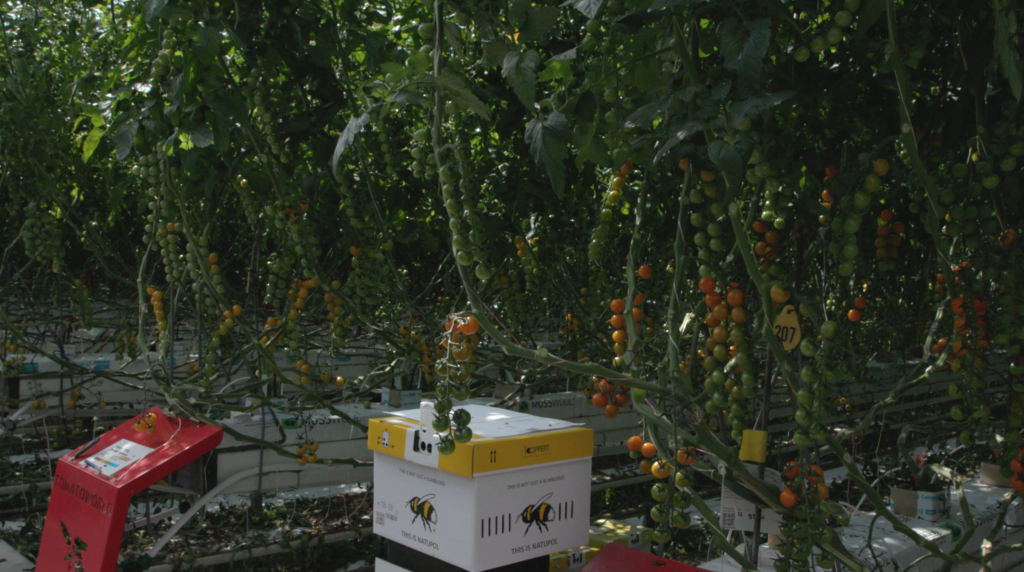
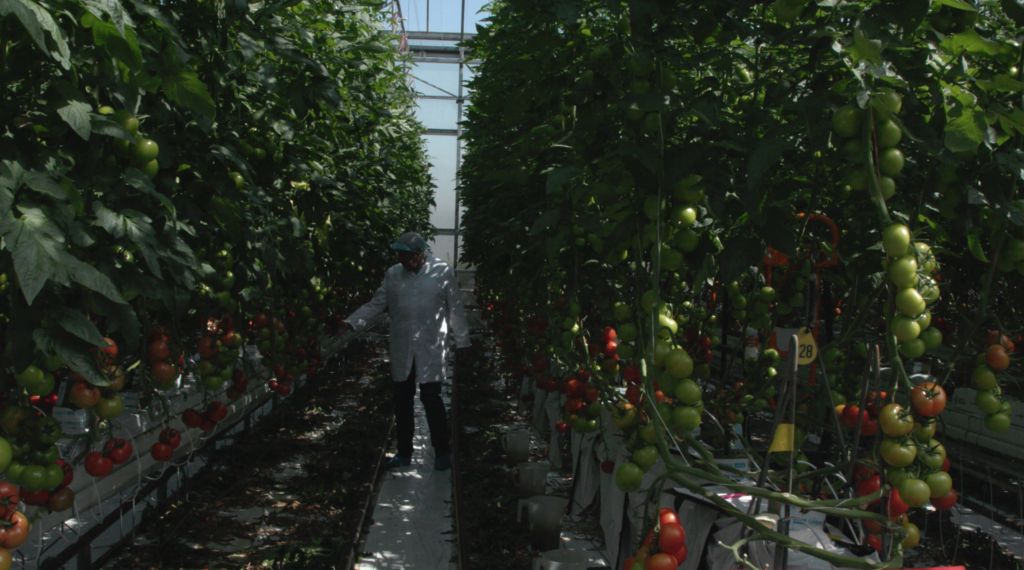
A high-tech tomato greenhouse in Westland, The Netherlands. Bumblebee hotels are brought in to pollinate the plants. One should only enter such a greenhouse wearing a sterile coat and shoe covers, to avoid bringing in diseases.
I learned that you should do something when you cannot sleep. I stand up and I turn on my laptop, trying to find images of the insides of a greenhouse. In one commercial, a developer compares a greenhouse to a Formula-1 car.
It is true that greenhouses sprawl with the speed of a F1 car, I think to myself. And tomatoes seem to be big travellers. On the other side of the road, farmers from Moldova travel to work in these high-speed greenhouses.
John Berger wrote A Seventh Man in the 70s about an industrialized Western Europe that simply can no longer exist without migrant labour. This was true long before people from Moldova left their land to work in the West, and it still rings true today. In 2020, there were at least half a million seasonal migrants working in the food industry in The Netherlands. Most are peasants from Poland, Romania and Moldova. The packaged meats, paprikas or tomatoes these people laboured over, are sold back in their countries for cheap.
Fuelled by this nightmarish state of the world and by the paradoxes of this so-called modern life, I begin working on an essay film about the industry of tomatoes. I want to poke at the myth that high-tech greenhouses are the most efficient way of growing tomatoes. That it is they that feed the world.
At the same time, I am doing research for another artwork, for which I document different gas and iron ore mines. I get to see what mining for critical minerals looks like. It leaves farmers without water, at best. Drinking water disappears in open pit mines, where it is mixed with heavy metals. Sometimes this toxic slurry gushes up and washes away the fertile topsoil.
These images flash in front of my eyes when eating a greenhouse tomato. The stories from Moldovans working in the Dutch food factories echo in my ears: the tons of fruit they must pick or the hundreds of pigs they slaughter over the course of a day. How they work with fever or with burns, because they are not officially employed; if they are called and they can’t come, they fear they won’t be called the next day.
Shooting this film, turns out, is nearly impossible. None of the greenhouses allow me inside, let alone to film.
Standing at this crossroads, I think: what if I made a jar of pickled tomatoes a character in my documentary? It’s also a glass container with tomatoes, just like a greenhouse. Only this one postpones rotting, as opposed to greenhouses with their automated lights, heat and mineral food, only ever speeding up growth.
Have you ever tried to look closely at a jar of pickled tomatoes? It stares back at you, it might even start sending bubbling signals, like an oracle.
This particular jar is asking me whether I really want to keep working as an artist. Do I really want to benefit from and contribute to these industrial nightmares? For a while, this is the only thing on my mind. But I fear that finding answers is harder than trying to formulate better questions.
Before I quit my life as an artist, I will try to finish this film and confront the oracle.
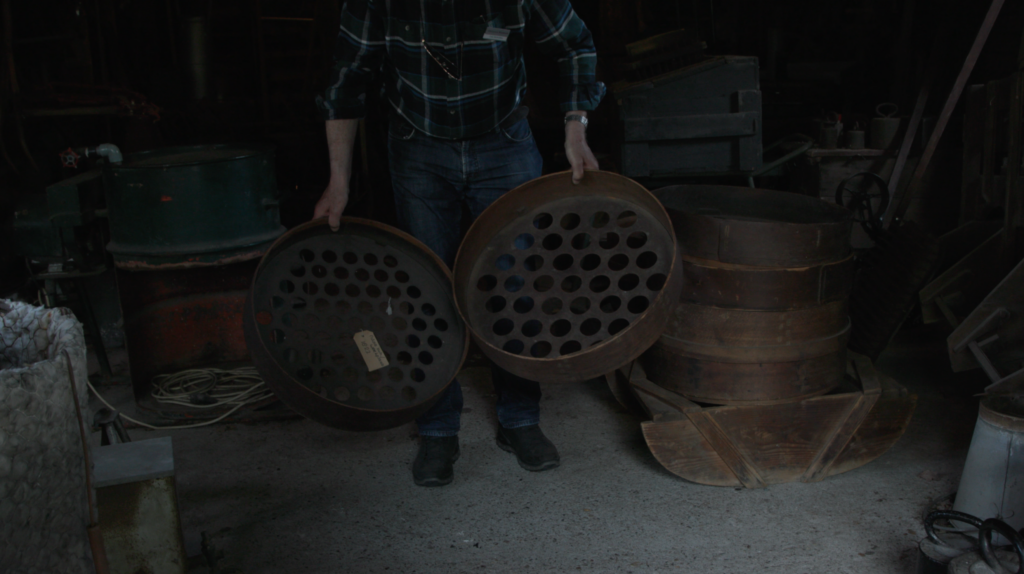
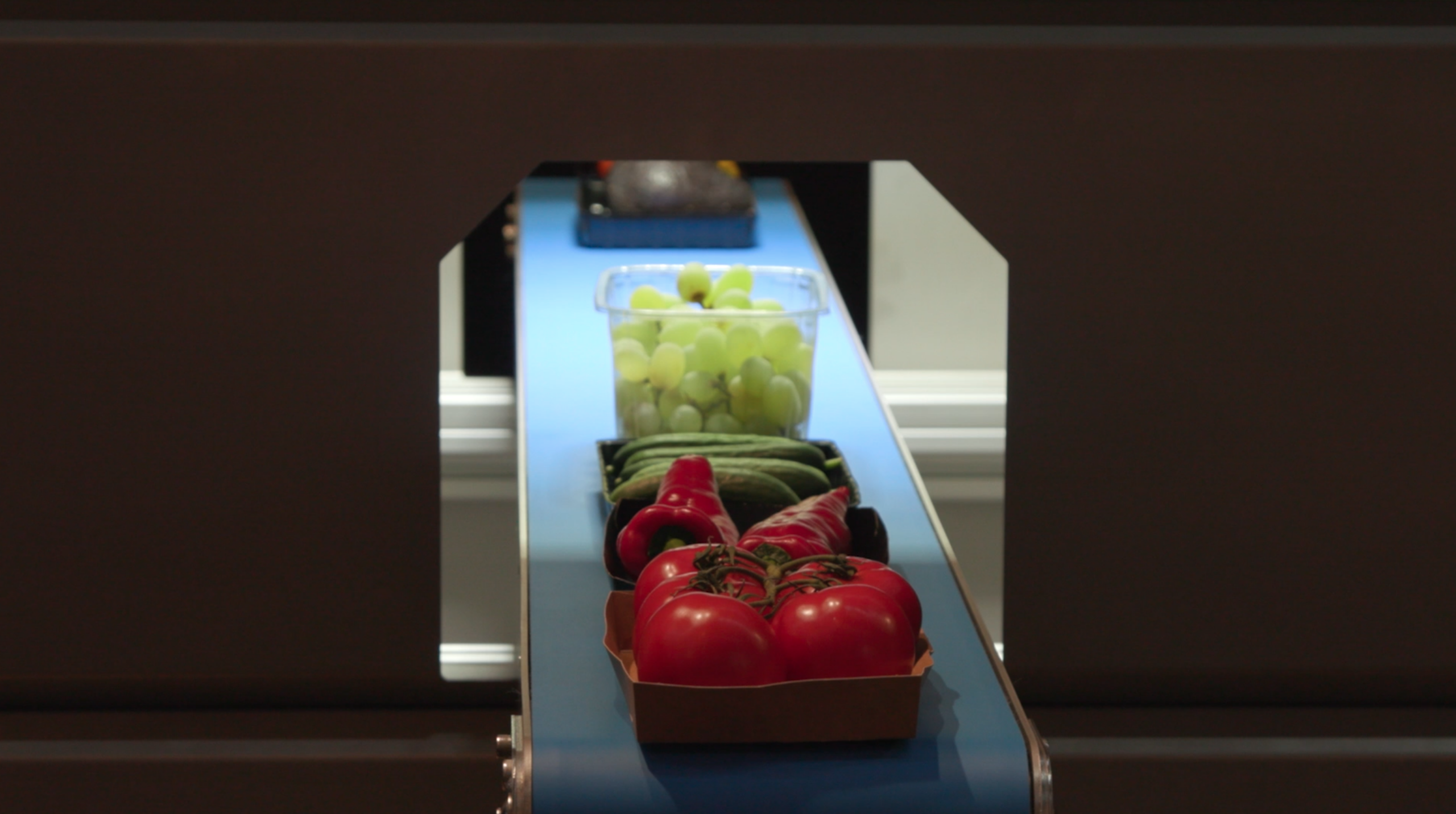
Before digital sensors and high-tech sorting devices, tomatoes were sorted out by size in rocking barrels through a sieve. Westland, The Netherlands.
In 2022, I travel to Moldova. In Câșlița-Prut, I meet Maria and Tolya. Their vineyard spreads out over a hill looking over Prut, Giurgiulești and Galați. Their vegetable garden is a five-minute walk from the river. I hear a lot about their work in the Dutch tomato greenhouses and about the long hours waiting at the border to sell raspberries and wine in Galați.
I’m staying for a few days. They are preparing to leave for another few months to work in the over-heated greenhouses. They check on their vineyard, they weed the garden, they are trying to sell last year’s slightly soured wine. The rest of the chores are left to their neighbours and parents, they say.
“He gives instructions about the land, the house, the well, the animals. As if in a few sentences he wishes to re-perform the daily activity of years,” writes Berger about the migrant man. Berger admits there were at least two million women working among the migrant workers in Europe when he wrote A Seventh Man. To write of their experience adequately would require a book in itself.
He continues:
“The migrant worker comes to sell his labour power where there is a labour shortage. He is admitted to do a certain kind of job. He has no rights, claims or reality outside his filling of that job. It is not men who immigrate, but machine minders, sweepers, diggers, cleaners, drillers. This is the significance of temporary migration. To re-become a man, the migrant has to return home.
The industrialized country, whose production is going to benefit from it, has not borne any of the cost of creating it, any more that it will bear the cost of supporting a seriously sick migrant worker, or one who is too old to work. They have a single function – to work. All other functions of their lives [to be brought up, to age, getting tired or dying] are the responsibility of the country they come from. They might have been unemployed in their country of origin, but their communities have invested considerable sums in their upbringing. To those who have machines, men are given.”
Back to the other side of the continent. The Netherlands, 2025. I hear stories about how some farmers refer to their Eastern European ‘hard-working hands’, employed with a zero-hour contract. One of them says: “They do not rest; they do not visit the theatre. I haven’t seen them enjoy music. They just like to work.”
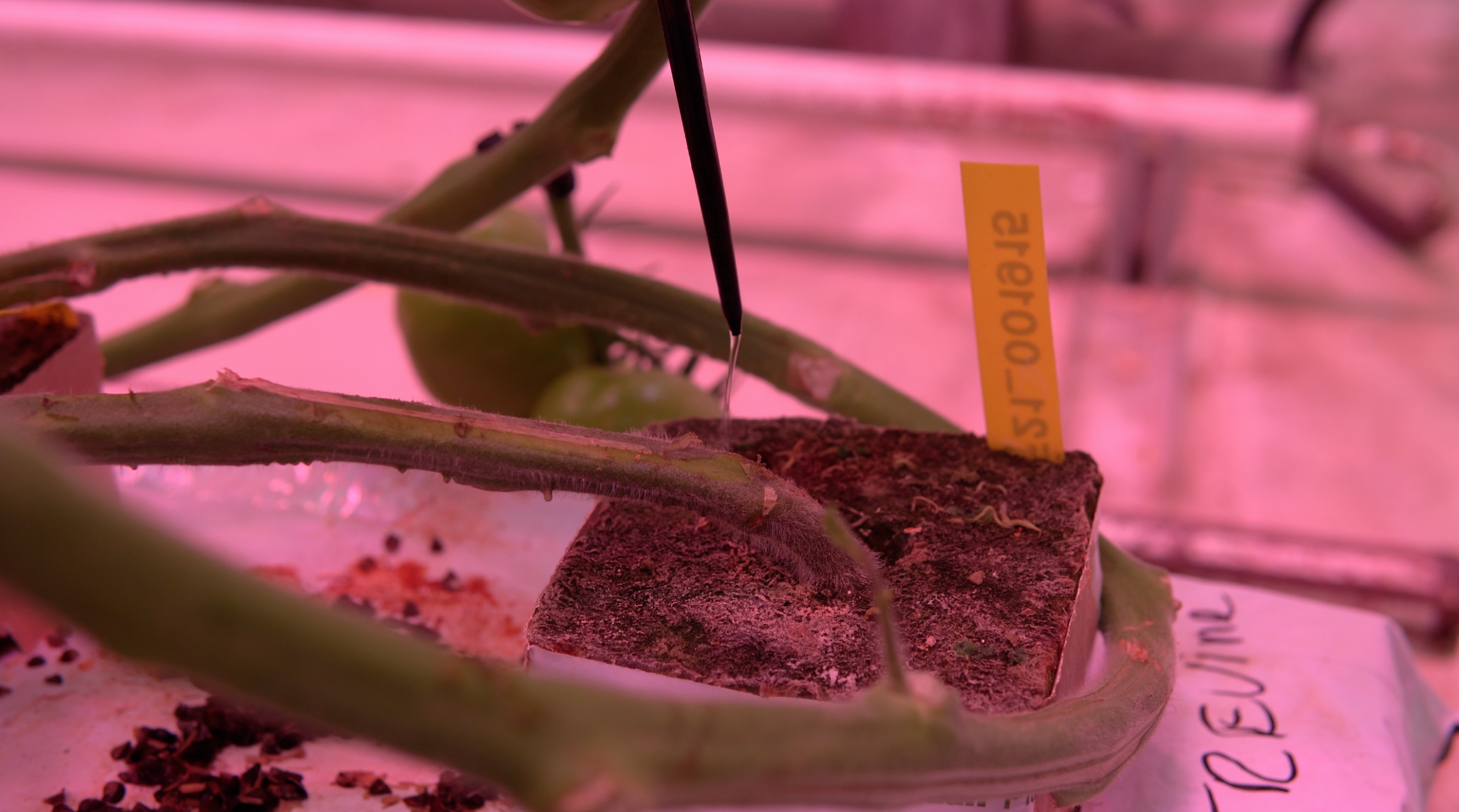
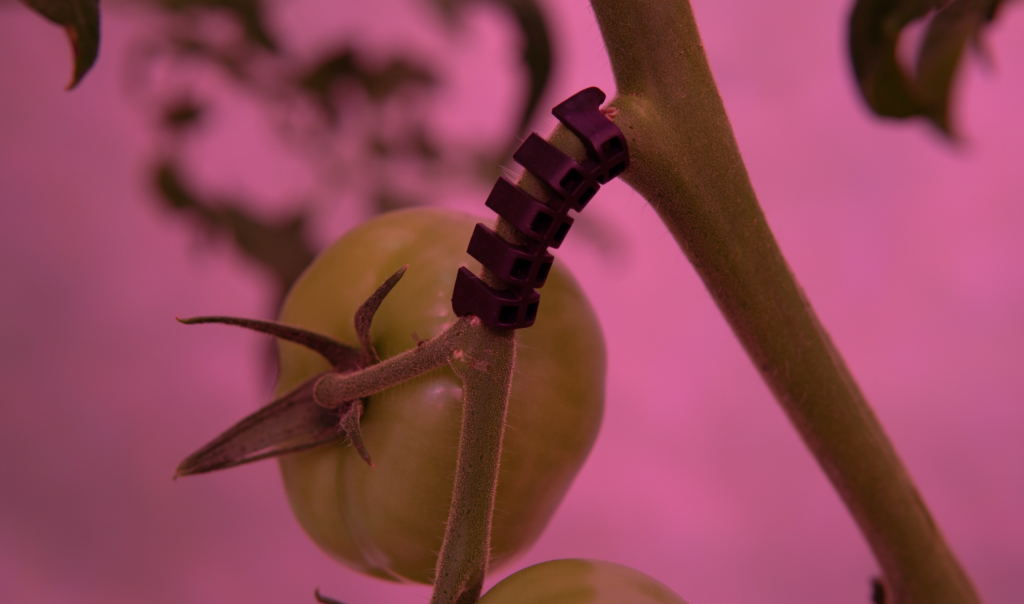
In an intensive, high-tech greenhouse, pink and blue wavelengths of LED lights are selected to shine on the tomato plants. The plants grow in rockwool substrate and the nutrients drip through small pipes, carrying minerals fertilizers and water. The tomatoes often become too heavy for the plant to carry and might break. To avoid such ruptures, plastic support plugs are installed on each branch.
In the meantime, I learn that tomatoes respond best to full spectrum light of red and blue wavelengths. Ideal growing conditions require 12 to 16 hours of light. They prefer 65 to 70 percent humidity during the night and up to 90 percent humidity during the day. They like calcium nitrate and magnesium sulfate. The balance between the temperature, light, humidity and nutrient level can be programmed and automated with the help of sensors, sometimes cameras, and a computer.
The harvesting, however, remains a problem. This is a task that cannot be automated.
There are two ironies here. One: the fruits grown in these perfect conditions are tasteless, notorious for being ‘water bombs’. Two: this kind of growing food is supposed to lift people up from misery and make space for ‘nature’.
I find ‘nature’ a frustratingly paradoxical word. It separates people from the conditions for their life: the living world. Whoever says ‘nature’ separates farming from the living world.
In A Seventh Man Berger writes about the inhabitants of modern metropolises who believe that ‘nature’ can always be scraped for resources. He writes: “Nature has to be bribed to yield enough. Peasants everywhere know this. It is not a question of working harder. The further working of the land is withdrawn as a possibility”.
To scrape too much off the living world is to scrape away the floor from under your feet.
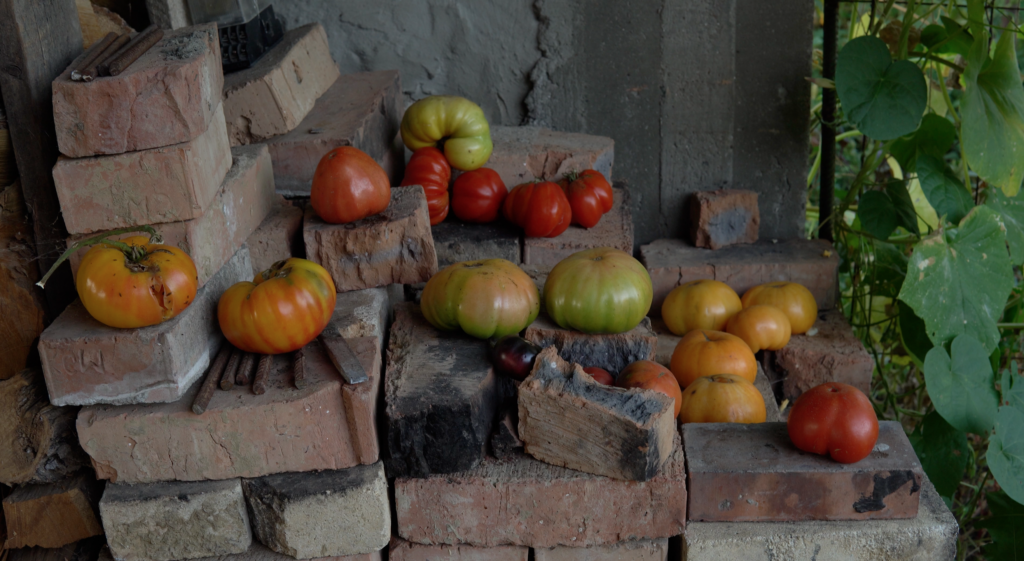
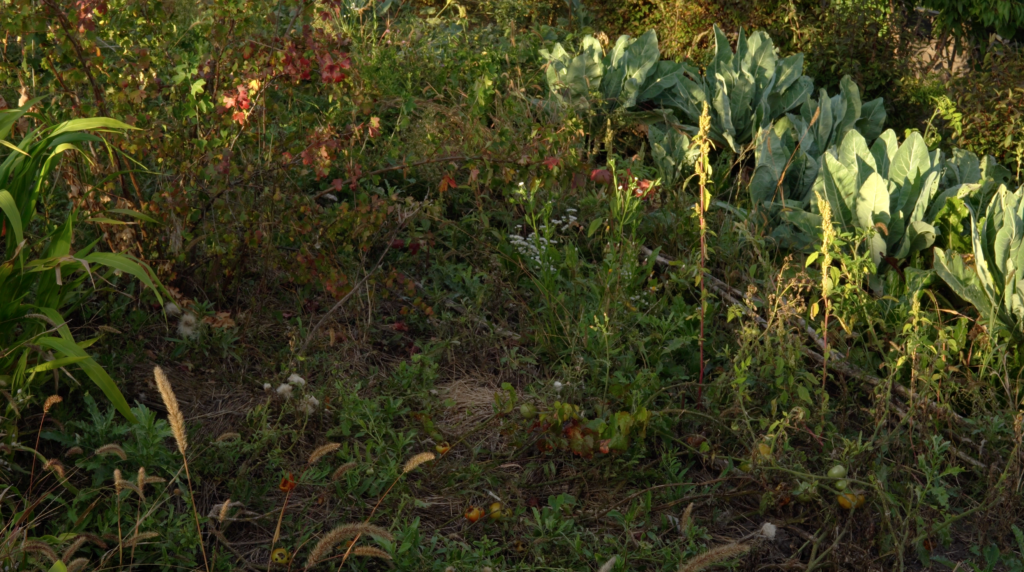
Tomatoes and a slice of the garden (based on principles of polyculture) at Grădina Moldovei, in Cigîrleni, Moldova.
Another place I visit is a seed bank in Moldova called Moldova’s Garden. Mariana Șeremet shows me her tomato garden and seed collection. I’m inspired to start my own seed bank. Not a seed vault, like the ones in the arctic. A different one, made of clay, like this one in Cigîrleni; like the houses on the banks of Răut river, where I grew up.
In 2023 this wish is growing into an art project. For one of the screenings of my film, I bring some seeds from a few heirloom tomatoes. I harvested them the same way Mariana does. I missed one important step, however, maybe the simplest one, which is labelling the jars with fermenting tomatoes. As a result, I have mixed the seeds of yellow cherry tomatoes with the ones from yellow, large, fleshy tomatoes. I pack each individual seed anyway and I share them with the visitors of the exhibition. I ask them to join me in the uncertainty of caring for them. Will it be a big or small yellow tomato? Will it grow well in the Netherlands? What kind of erratic weather will the next years bring?
I also share the recipe for saving heirloom tomato seeds the following year: let the best ripe fruit ferment in a bit of water for 2-5 days. Skim off the foamy fermented pulp, the good seeds will be at the bottom of the jar. Carefully sieve the seeds and let them dry for a few days on a coffee filter. Then share the seeds and invite people to grow tomatoes and share the seeds again.
At Grădina Moldovei, I learned that to obtain seeds from a fruit, you mimic the conditions of a seed falling on the ground in autumn. First, you let the fruit ferment in a bit of rainwater, until the acidity from fermentation breaks down the sugars around the seeds. Some seed banks freeze their seeds, to simulate what happens to a seed that falls in winter and gets covered by snow. This kills any fungi or seed pathogens.
About those sugars around the seeds: I learn that they are there to protect the seeds. I read an article that suggests that the sweetness and intense smell of tomatoes are not caused by their so-called ideal growing conditions. In those short periods where the sun, humidity or nutrients are absent, a tomato plant experiences certain, let’s call them, stress signals. When that happens, the plant might send extra sugars to coat its seeds with, so that they can survive these uncertain weather conditions.
Could this be a lesson for life? Could it be that perfect conditions are unattainable, unnecessary or even abusive, always dependent on someone else’s imperfect conditions or on some invisible territories? Or worse, are ‘perfect conditions’ doomed to deliver monstrous, tasteless fruits?
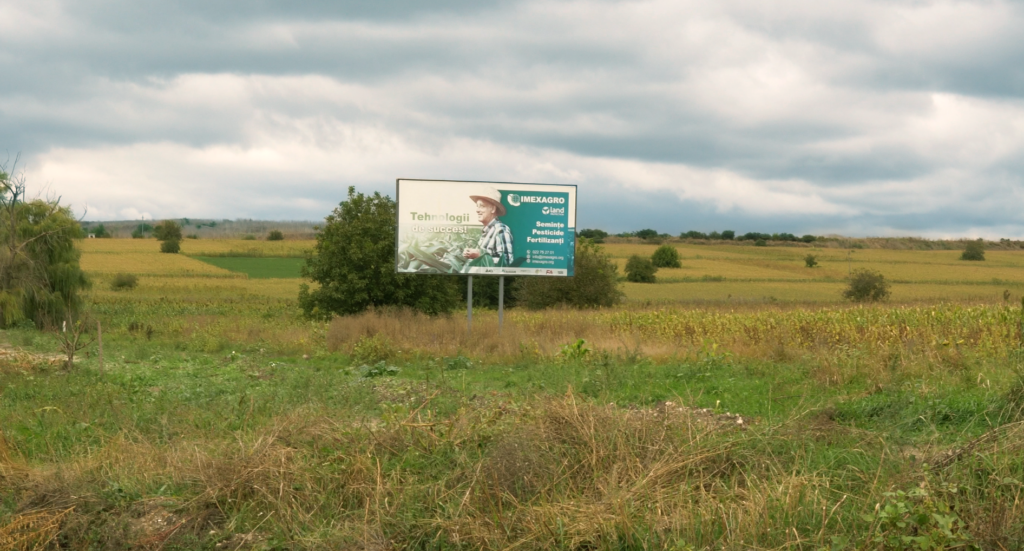
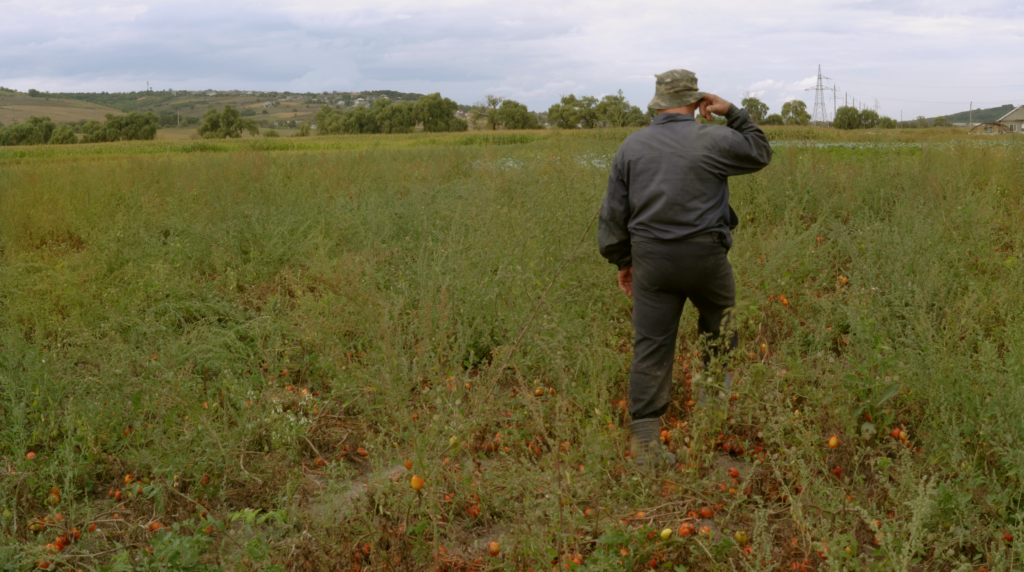
An advertisement for synthetic fertilizers, seeds and pesticides in Ghindești, Moldova. A tomato farmer in Buțeni, Moldova.
After screening the film for the first time in Moldova, I am invited to the front. I am more anxious than after any other screening. I brought the film home, that’s how it feels.
Someone asks: “If Moldova joins the EU and follows the path of an increasingly techno-industrial way of living and farming, we might be in same position that you show in the film, so how do we want to do this? Do we want to perpetuate these western extractive models? And if not, what is an alternative?”
I smile, not because I know the answer, but because I am so happy to hear this question. I was told the Q&As after film screenings are rarely interesting, but here, in cinema hall number 1, it feels like we are all thinking out loud and together. For the first time, I do not feel split between my artist-self and my peasant-self, between my Moldovan and Dutch self.
I am sure, in the future, I will lay awake with more haunting questions, but tonight, I am happy not to be alone with them.
Film trailer:
https://vimeo.com/1073096920?fl=pl&fe=sh
IMPOSIBILUL POSIBIL – ÎN CĂUTAREA LĂUTARILOR UITAȚI
The Loneliness of the Long Distance Activist: A Plea for Care Work as a Revolutionary Tactic
Ziua Națională a Culturii
Prin trimiterea adresei de e-mail, dați acord cu prelucrarea datelor și politica de confidențialitate.
